

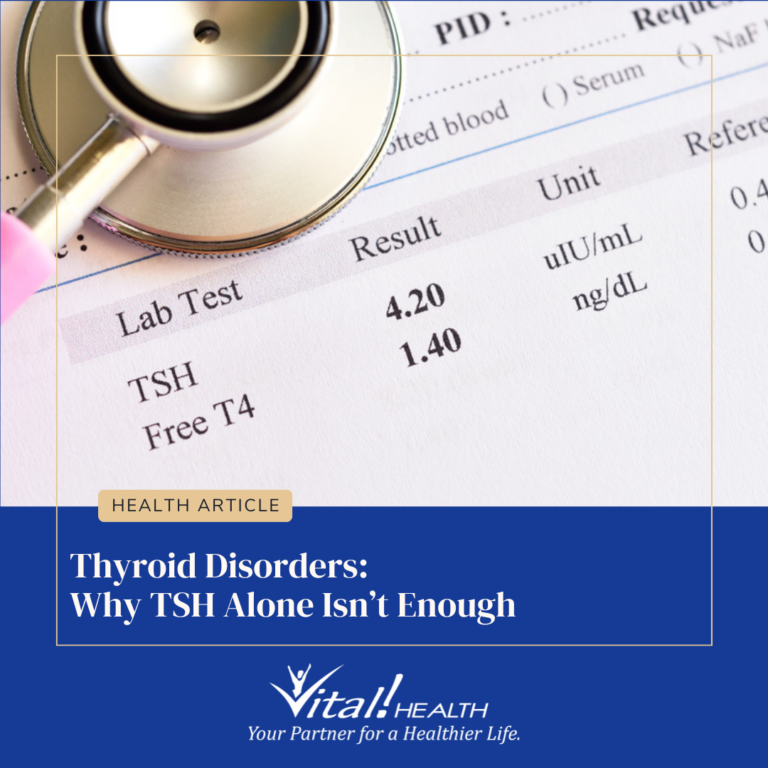
Many people with thyroid symptoms—fatigue, brain fog, cold intolerance, hair thinning, weight changes, anxiety, depression, constipation, dry skin, or stubborn cholesterol—are told their thyroid is “normal.” That conclusion is often based on a single lab value: TSH, sometimes paired with a basic T4 test. While these labs are useful screening tools, relying on them alone is like judging heart health by pulse without checking blood pressure, circulation, or oxygen delivery. When thyroid evaluation stops too early, people can go years without answers, often requiring more aggressive treatment later because the problem was never fully understood.
TSH (thyroid-stimulating hormone) reflects the pituitary’s signal to the thyroid, not how effectively thyroid hormone is working in the body. Free T4 measures the primary hormone produced by the thyroid, while Free T3 reflects the active hormone that cells actually use. Reverse T3 shows when the body is applying a metabolic “brake,” shunting T4 away from active T3 during stress, inflammation, illness, or under-fueling. Total T4 and T3 help clarify production and binding patterns. Thyroid peroxidase (TPO) and thyroglobulin antibodies identify autoimmune activity, which can be present years before hormone levels fall outside reference ranges. Each test answers a different question; no single one tells the full story.
Even when thyroid labs appear borderline or confusing, the thyroid gland itself may not be the primary problem. The pituitary can mis-signal due to chronic stress, inflammation, blood sugar instability, sleep disruption, or prior head injury. The liver is responsible for much of the conversion of T4 into active T3; sluggish liver function, impaired bile flow, nutrient deficiencies, or toxin burden can quietly reduce thyroid effectiveness without dramatically altering TSH. The gut influences hormone recycling and immune activation, and adrenal stress can push conversion toward reverse T3. In these cases, the thyroid looks weak on paper, but the real issue lies elsewhere in the communication network.
Nutrients also matter. Iodine is essential for thyroid hormone production, but both deficiency and excess can disrupt function, especially in autoimmune conditions. Selenium supports conversion and antioxidant protection within the thyroid, zinc and iron influence hormone synthesis and receptor sensitivity, and adequate protein and carbohydrates help prevent excessive reverse T3 production. Without these foundations, labs and medications often underperform.
This is where acupuncture can play a meaningful role. Rather than forcing hormone levels, acupuncture supports the regulatory systems that control thyroid function—improving pituitary signaling, liver metabolism, circulation, and stress response. Many patients notice improved energy, temperature regulation, sleep, digestion, and mental clarity even before lab values shift.
A comprehensive thyroid approach involves the use of more tests, and an evaluation of symptoms, nutrients, labs, and lifestyle, considered together. Then thyroid and health care becomes clearer—and far more effective.
Learn more about our approach to thyroid health here.
Want to hear more from Dr. Carling? Check out our podcast. Search for VitalHealth4You on your favorite podcast listening app or go to vitalhealthcda.com/podcasts/