
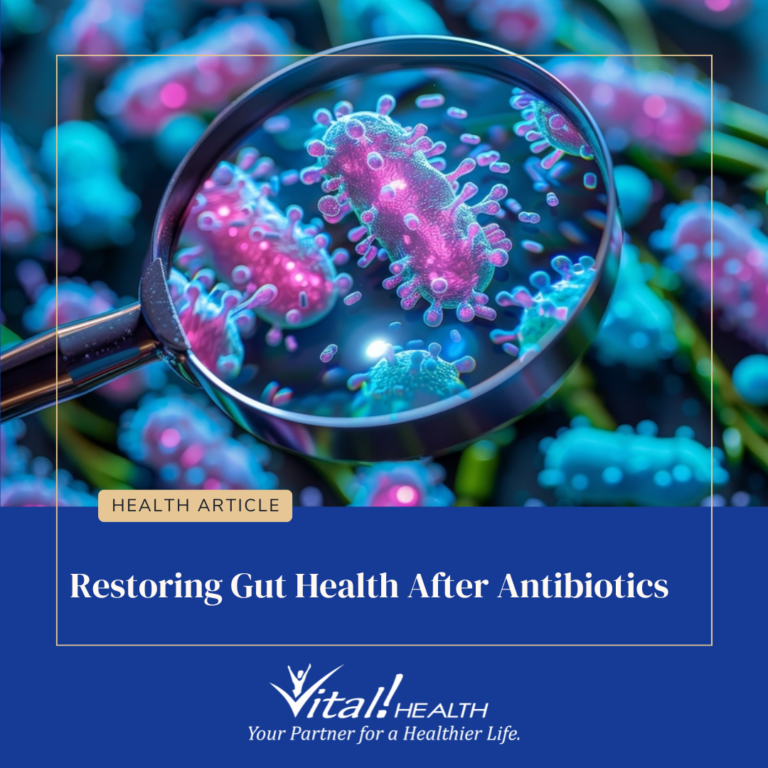
Antibiotics can be lifesaving—but they are not selective, and they are often over-prescribed. While the intent is to target harmful bacteria, they also disrupt the bacteria and other microbes (living organisms) that comprise our gut ecosystem, called “friendly bacteria” or the “good guys.” This microbiome (the gut environment that houses these good guys), plays a central role in digestion, immune regulation, inflammation control, and even mood. When it’s disturbed, the ripple effects can be far-reaching.
Antibiotics reduce microbial diversity—often dramatically. Some strains are suppressed temporarily, while others may be wiped out entirely. This creates an imbalance known as “dysbiosis,” where opportunistic organisms (like yeast or less beneficial bacteria) can overgrow. This can result in bloating, irregular bowels, food sensitivities, fatigue, or lowered immune resilience.
Not all antibiotics affect the gut equally. Broad-spectrum antibiotics tend to cause more widespread disruption than narrow-spectrum ones. Repeated courses, long durations, or high-potency dosing compound the effect, making recovery slower and sometimes incomplete without intervention.
This is where the conversation often turns to probiotics—but it’s not simple. Not all probiotics are the same, and not all are helpful in every situation. Some strains are transient; they pass through without colonizing. Others may be beneficial, but only when matched appropriately to the individual and the condition. Simply “taking a probiotic” is often insufficient.
A more complete approach includes three categories: prebiotics, probiotics, and postbiotics. Prebiotics are the fibers and compounds that feed beneficial bacteria, probiotics are the organisms themselves and postbiotics are the metabolic byproducts those bacteria produce—such as short-chain fatty acids—which are actually responsible for many of the health benefits attributed to a healthy gut.
If someone is taking probiotics but not improving, the issue may not be “seeding” the gut—it may be that the internal environment isn’t supportive enough for those microbes to thrive, colonize and produce beneficial postbiotics. Restoration, then, is not just about replacing bacteria—it’s about rebuilding the terrain.
This includes emphasizing whole, diverse plant and animal foods to increase microbial diversity. Fermented foods, bone broths and mineral-rich foods support the gut lining. Bitters and digestive support can help reestablish proper signaling and enzyme function. Sleep, stress reduction, and circadian rhythm also play a surprisingly large role in microbial balance.
Acupuncture adds another dimension. It has been shown to influence gut motility, reduce inflammation, regulate the nervous system, and improve blood flow to digestive organs. Clinically, it can help restore communication between the brain and gut—an often-overlooked component of microbiome recovery.
If you feel that antibiotics are the only solution, and absolutely necessary, recovery should be intentional and multi-faceted. When we support the body in rebuilding, not just replacing, the gut can regain its resilience, diversity, and function, thereby restoring health globally in the body.
If you need help navigating the path back to gut health, we’re here to guide you.
Learn more about our approach to digestive health here.
Want to hear more from Dr. Carling? Check out our podcast. Search for VitalHealth4You on your favorite podcast listening app or go to vitalhealthcda.com/podcasts/